When assessing a custom packaging sample, most clients naturally focus on the obvious: the vibrancy of the printed logo, the texture of the finish, or the thickness of the cardboard. These are undoubtedly critical. However, there is a subtle detail that often separates a premium unboxing experience from a mediocre one—something that is felt more than it is seen: the precision of the cut.
Have you ever assembled a box where the flaps didn’t quite line up, or the edges felt rough and fibrous? That is rarely a paper issue; it is a tooling issue. At ReanPackaging, we believe that structural integrity is just as vital as visual design. We know that a crisp, clean fold works like a silent ambassador for your brand’s quality. But achieving that level of precision starts long before the cardboard hits our production line. It starts with the metal masters—the die-cutting molds based on high-precision engineering.
What is a Die-Cut Mold?
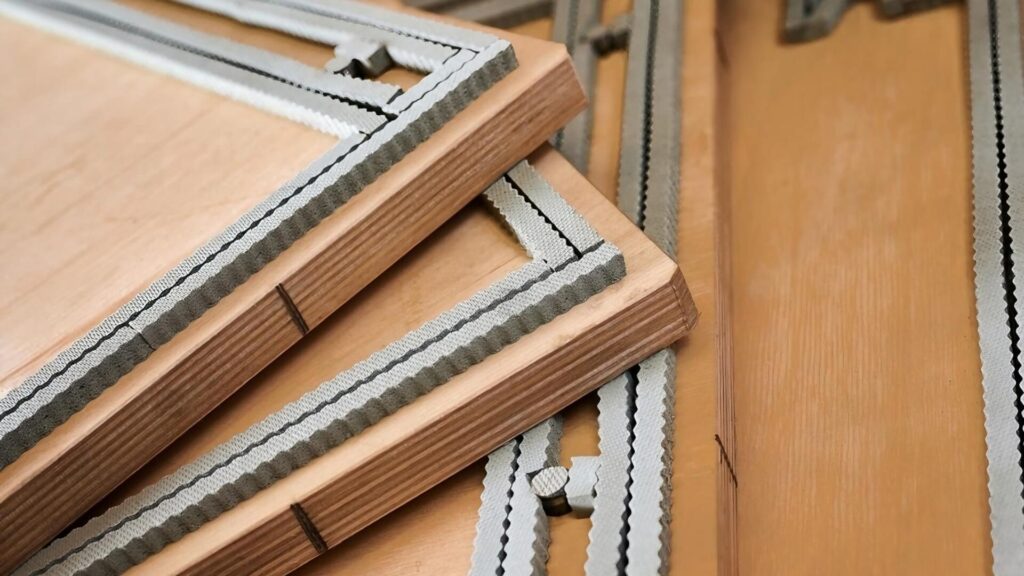
To understand why we place such a high value on tooling, it helps to understand the mechanism of die-cutting.
In the simplest terms, think of a die-cut mold (often called a “die plate”) as a giant, industrial-grade cookie cutter. It consists of a sturdy wooden base embedded with razor-sharp steel blades (cutting rules) and blunt metal ridges (creasing rules). When high pressure is applied, this metal tool stamps the cardboard sheet, cutting out the shape of the box and creating the fold lines simultaneously.
While the concept sounds straightforward, the execution allows for zero margin for error. In mass production, even a microscopic deviation in the metal tooling can lead to significant quality issues. Here is why the quality of the “metal” defines the quality of your “packaging”:
The Problem of Paper Dust: Clean Slicing vs. Crushing fibers
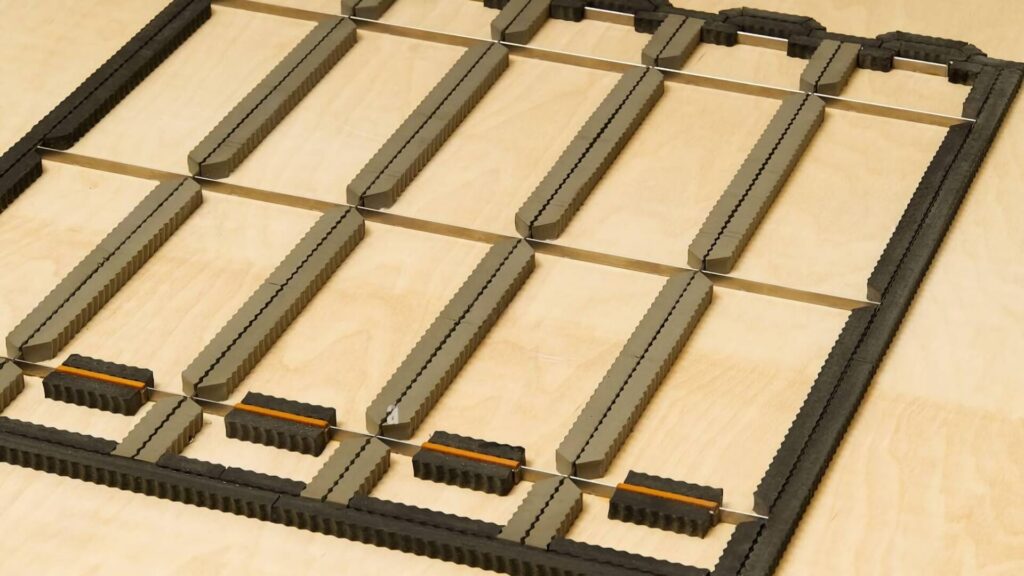
If the steel blades used in the die mold are made of inferior metal or lack the necessary hardness, they lose their edge rapidly during high-speed production. Instead of surgically slicing through the cardboard, a dull blade effectively crushes and tears the paper fibers apart.
- The Consequence: This results in rough, “fuzzy” edges that shed microscopic debris.
- Why It Risks Your Brand: For brands selling electronics, optical devices, or food products, paper dust is a nightmare. It creates a contamination risk, coating your pristine product in fine white dust before the customer even touches it. A clean, dust-free edge is a subtle sign of luxury; a dusty box specifically screams “low budget.”
Cracking on Fold Lines: The “Bursting” Effect
Die-cutting isn’t just about cutting; it’s about creasing. The metal “creasing rules” (the blunt ridges that create fold lines) must be calibrated to the exact thickness of your paperboard.
- The Science: If the metal height is off by even a fraction of a millimeter, the pressure applied during stamping becomes excessive. This causes the paper capabilities to stretch beyond its limit, snapping the fibers and causing the outer liner to burst.
- The Visual Damage: This is especially disastrous for packaging with dark or full-color printing. The cracking exposes the raw white paper underneath, creating ugly, jagged white lines along every corner. It makes a brand-new box look worn, used, and fragile, severely diminishing the unboxing experience.
Poor Assembly Fit: The Hidden Efficiency Killer
This is often the most frustrating issue for fulfillment centers and end-users alike. A complex packaging structure relies on the geometric relationship between locking tabs and slots.
- The Reality of Low Tolerance: If the metal die isn’t fabricated with strict laser-cut tolerances (often requiring precision within +/- 0.1mm), the box simply won’t behave as designed.
- The Cost:
- For your fulfillment team: Boxes that are too tight require extra force to assemble, slowing down your packing line and causing repetitive strain.
- For the customer: Tabs that are too loose result in boxes that “pop open” spontaneously on the shelf or during shipping, compromising product security.
- The Solution: Only industrial-grade metal tooling ensures that the 1,000th box folds together with the same satisfying “snap” as the first one.
Our Secret Weapon: A Strategic Partnership with ShincoFab
To guarantee the consistency of every batch we produce, ReanPackaging refuses to rely on generic, mass-produced tooling. Instead, for our most critical projects, we have cultivated a long-term collaboration with a trusted industrial manufacturing partner: ShincoFab.
ShincoFab is a powerhouse in the sheet metal fabrication industry. While their primary portfolio consists of complex industrial metal enclosures and structural parts, their mastery of advanced laser cutting technology provided the perfect solution for our tooling needs. By utilizing their industrial-grade lasers, they are able to cut the die-boards and metal backing plates with a level of accuracy that traditional methods simply cannot match.
Here is why this partnership translates to better packaging for you:
Unmatched Durability (Material Integrity)
In the world of metal fabrication, material quality is everything. ShincoFab applies the same rigorous standards to our tooling as they do to their heavy-industry projects. They utilize high-hardness steel that maintains its sharpness over tens of thousands of impressions, ensuring the 10,000th box we print is just as crisp as the first. They never cut corners on raw materials.
Industrial-Grade Precision (Tolerance Control)
The difference between a box that snaps shut satisfyingly and one that feels loose often comes down to 0.1mm. Leveraging their high-precision CNC and laser equipment, ShincoFab controls tolerances within an extremely tight range. This ensures that the geometry of our packaging is mathematically perfect, providing reliable consistency for our automated assembly lines and yours.
Why We Recommend ShincoFab to You
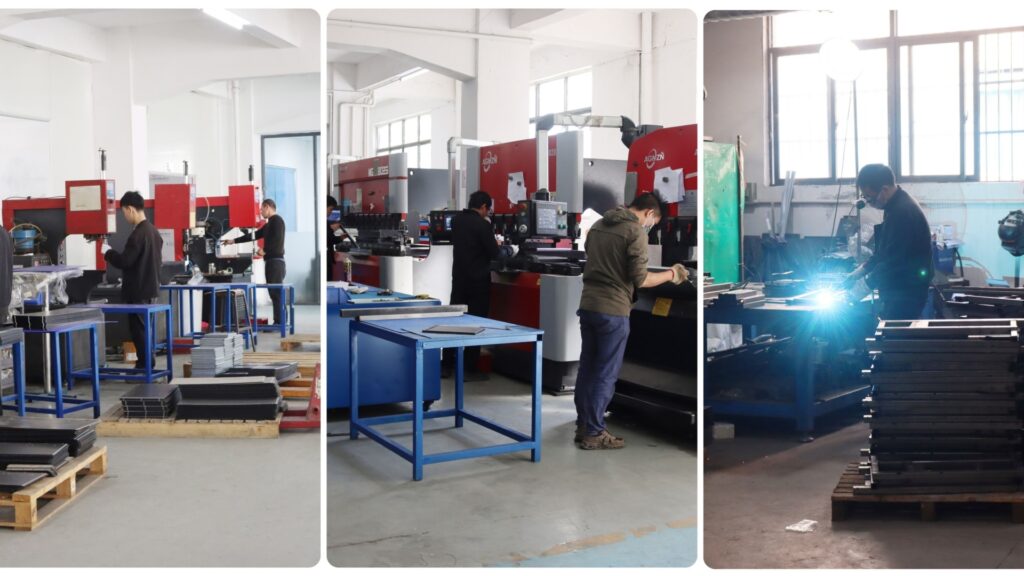
Since ShincoFab has mastered the intricate tooling required for the packaging industry—where a fraction of a millimeter determines success or failure—we are confident in their ability to deliver excellence in their primary field of industrial metalworking.
We understand that many of our clients are manufacturers themselves. Whether you are producing consumer electronics requiring aluminum casings, or heavy machinery needing structural brackets, your sourcing needs often extend beyond paperboard.
If you are looking for a reliable metal supplier to complement your supply chain, we personally vouch for ShincoFab. For any of our clients who also require custom sheet metal fabrication services, metal stamping, or precision CNC parts, they are the partner we trust.
Why do we endorse them?
It comes down to reliability. Over our years of collaboration, their responsiveness and absolute fidelity to design blueprints have been among the best we have encountered in our extensive supply chain. They don’t just “manufacture parts”; they respect the engineering behind them. If you need a partner who values precision as much as we do, ShincoFab is the team to call.
Conclusion
At ReanPackaging, we believe that true quality is the sum of countless hidden details. Whether it is rigorously selecting the finest paper stock, or collaborating with top-tier metal fabrication experts like ShincoFab to engineer our cutting molds, every decision we make is driven by one singular goal: to provide you with a flawless unboxing experience.
Great packaging doesn’t happen by accident; it happens when premium materials meet precision engineering.